From the Archives: How Alligator Alley was Carved Across the Florida Everglades 🐊🌿
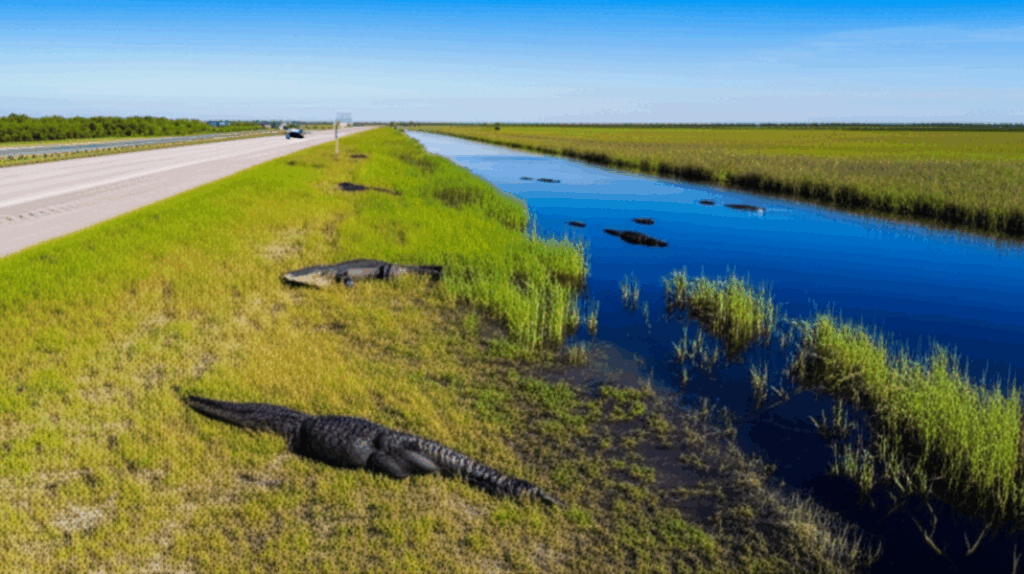
Alligator Alley, that seemingly innocuous stretch of highway carving its way through the vast, mysterious expanse of the Florida Everglades, stands as an audacious testament to human ingenuity—an ironic juxtaposition of progress and preservation. While it provides a crucial conduit between East and West Florida, it also disrupts the delicate balance of one of the planet’s most ecologically rich environments. What drove the decision to cut through this natural wonder, and what are the repercussions of such a decision? 🛣️🤔
The Genesis of a Highway through a Wilderness
Completed in 1968, Alligator Alley was intended to alleviate traffic on existing routes, providing a more direct passage and a faster means of travel across the state. With a vision that glinted like sunlight on the Glades’ waters, policymakers and planners set to work, employing technology and manpower to reshape the land as if it were simply clay in an artist’s hands. Notably, they often overlooked the more vulnerable inhabitants of that land. In doing so, they confronted a paradox: the necessity of infrastructure versus the fragile ecosystems that adorned the very land they sought to traverse. 🌅
The irony lies in this core contradiction. Florida’s Everglades, often referred to as the “River of Grass,” serves not merely as a backdrop but as a fundamental ecological heartbeat pulsating through the region. Carving a road through this expansive cathedral of biodiversity was akin to chiseling an altar into a church; the act might facilitate worship, but at what cost to the sanctity of the surroundings? 🏞️
Designing a Passage: Engineering Marvel or Environmental Catastrophe?
The construction of Alligator Alley involved one of the most extensive engineering operations in Florida history. Massive amounts of earth were moved, wetlands were drained, and bridges and culverts were designed to allow for the movement of water—and wildlife. Yet, as the concrete laid down like a heavy blanket across the marsh, scientists and conservationists raised alarms. They pointed out that the highway would become a deadly barrier for animals attempting to cross, increasing mortality rates for species like the endangered Florida panther. 🐾🔧
Consequences and Conservation: The Road to Redemption
But it isn’t all doom and gloom. Efforts have been undertaken to mitigate the impact of Alligator Alley on wildlife. With the encroachment into natural habitat laid bare, the Florida Department of Transportation launched initiatives aimed at wildlife crossings and population recovery programs for vulnerable species. The antithesis of the original vision—construction versus conservation—has become a battleground for coexistence. 🌍❤️
- Wildlife Crossings: Elevated passages designed for animals have been constructed, allowing safe passage across the highway.
- Monitoring Programs: Innovative tracking methods are being employed to study the movement patterns of key wildlife species.
- Community Engagement: Local organizations are working to raise awareness and engage the public in conservation efforts.
Reflections on the Road Ahead
As we drive along Alligator Alley today, we are offered not just the promise of speed but a visceral reminder of the consequences of our choices. The road runs like a vein through the rich tapestry of the Everglades, illuminating how human ambition intertwines with the world we inhabit. It symbolizes the struggle between the intrinsic beauty of nature and the relentless march of progress. 🏞️🚗
Like the serpentine alligator gliding silently beneath the water’s surface, the highway remains cloaked in irony: designed to connect, yet it often divides. Critics and advocates alike must navigate this paradox, as the road continues to evolve and adapt under the scrunity of progress, stewardship, and ecological awareness. Today, Alligator Alley serves as both a practical commute and a cautionary tale, urging us to tread carefully as we carve through the pristine wilderness of the Everglades. 🌿⚖️