
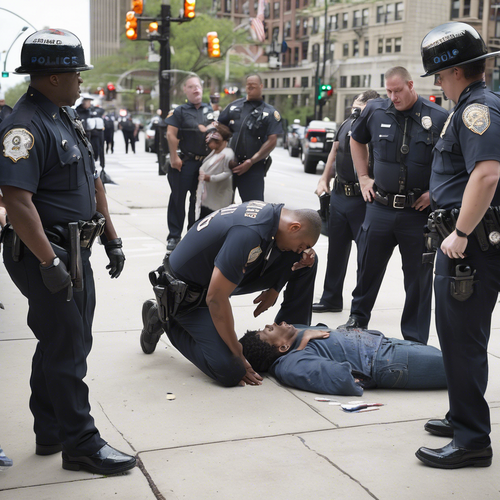
Tragedy in the Line of Duty: A Chicago Officer’s Life Lost to Friendly Fire
In a harrowing incident that has sent shockwaves through the Chicago community, a police officer was tragically killed by friendly fire during a high-stakes standoff. This incident, emblematic of the unpredictable dangers law enforcement officers face, comes as a grim reminder of the complexities and challenges inherent in policing urban environments. 💔
On the night of the accident, officers were responding to reports of gunfire in a densely populated neighborhood. As tensions rose and confusion reigned, a single shot rang out, resulting in the loss of Officer Sarah Kelly, a five-year veteran of the Chicago Police Department. The incident has ignited a passionate discourse surrounding the safety protocols of police forces and the urging need for improved training practices to prevent such tragedies in the future.
Understanding Friendly Fire: The Human Element
Friendly fire, while infrequent, is a critical concern within law enforcement. Statistics reveal that it accounts for a significant portion of officer-involved shootings. The FBI has reported that over a dozen officers have died from friendly fire incidents in the past few decades, raising urgent questions about training, coordination, and operational readiness. 🚔
“We must address the systemic issues that lead to miscommunication and errors during stressful situations,” warns policing expert Dr. Michael Urban, who advocates for enhanced simulation training to prepare officers for the chaos of real-life engagements.
Officer Safety: Procedures Under Scrutiny
The aftermath of the shooting has prompted immediate calls for an in-depth review of current safety procedures within the Chicago Police Department. Advocates argue that real-time communication devices, better identification protocols, and tactical empathy training can reduce the likelihood of such incidents occurring again.
- Real-Time Communication: Proper communication during chaotic confrontations is paramount. Investments in technology that enhances the clarity and immediacy of information shared among officers can help mitigate risks.
- Tactical Identification: A standardized system for identifying officers in the field, perhaps through the use of varying uniforms or equipment, could prove invaluable in preventing deadly mistakes.
- Simulation Training: Ongoing, high-stress simulations involving multiple scenarios can better prepare officers to navigate uncertain environments, ensuring they can differentiate friend from foe in real-time. 🧠
Community Impact: Trust and Transparency
Officer Kelly’s death has elicited responses from a diverse range of stakeholders, including community leaders, police unions, and advocacy groups. Many argue that transparency in reporting details about the incident is essential for community trust. The City of Chicago is now tasked with the difficult job of maintaining its relationship with community members while addressing the emotional toll of this tragedy.
A public memorial commemorating Officer Kelly has been organized by local community groups—an effort to not only honor her sacrifice but to re-engage dialogue about policing reform and accountability in the wake of such heart-wrenching events. 🌹
“We cannot let this tragedy become just another statistic. The changes needed to ensure the safety of our officers and our communities are critical,” said activist Marcus Thompson during a rally advocating for police reform.
Conclusion: Moving Forward After the Tragedy
Officer Sarah Kelly was not just a victim of an unfortunate incident; she was a dedicated public servant committed to her community. As Chicago grapples with this loss, the imperative for introspection within the police department is clear. If there is a silver lining to be found amidst the sorrow, it lies in the potential for systemic change that could safeguard not only officers but the communities they serve. 💡
The road ahead will undoubtedly be fraught with challenges, but through improved training, community engagement, and a commitment to transparency, there rests a glimmer of hope that tragedies like this can be averted in the future.




Do we really trust the procedures in place to keep officers safe? The human element cant be ignored. Lets discuss.
Can we discuss the real issue here? How can we prevent such heartbreaking incidents and rebuild trust in our communities?
Do we trust our police enough? Friendly fire tragedy raises questions on transparency and officer safety procedures. Thoughts?
Is it fair to blame the officers involved in friendly fire incidents? Should we focus more on improving training and communication protocols instead?
Do you think better communication protocols could have prevented this tragedy? Its heartbreaking to see lives lost in the line of duty.
Do you think more training can prevent friendly fire incidents? Lets discuss how to improve officer safety together.
Do you think more training could prevent friendly fire incidents like this? Maybe technology could help too? Lets discuss!
Training alone wont solve it. We need better technology and stricter protocols. Lets dive deeper.