
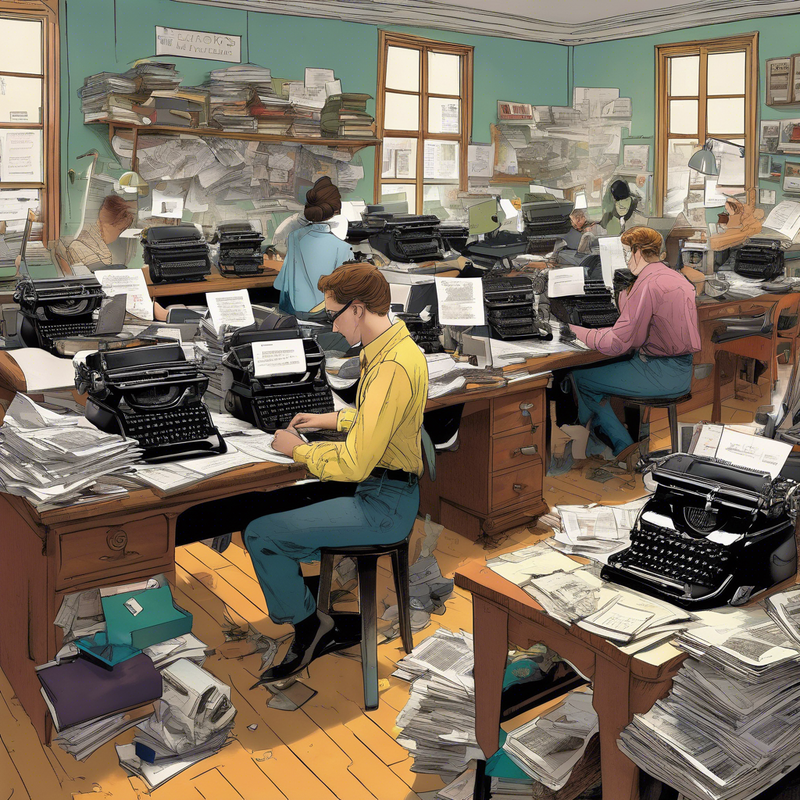
Letters to the Editor: A Reflection on Modern Discourse 📝💬
In today’s quickly spinning carousel of information, where opinions ricochet off the internet’s virtual walls like errant balls in a pinball machine, letters to the editor stand out as rare gems—each one a snapshot of society’s pulse in a moment of time. While we click through an avalanche of headlines and snippets, how much do we appreciate the deliberate reflections of everyday voices that dare to challenge, question, or simply share in the public sphere? 🤔
The Substance of Dialogue
Reading letters to the editor evokes the same nostalgic warmth as unearthing an old shoebox filled with love letters, each revealing intimate details of thought and emotion. These correspondences offer a canvas painted with different hues of collective sentiment. They can be sharp, revealing the underlying tensions of a divided society, or tender, expressing the hope of unity just around the corner. They represent a striking antithesis: a longing for connection in a world increasingly defined by digital distance.
Amidst an era where the editorials of old are often replaced by a barrage of tweets and Instagram posts, it is essential to remember that these letters not only inform but also reflect. They often highlight significant themes that resonate deeply within a community. From calls for action against climate change to pleas for better mental health resources, these letters are more than mere opinions; they are urgent conversations on topics that shape our lives. 🌍
Technological Tides and Their Toll
Irony lies at the heart of our technological age—the same platforms that grant us the power to broadcast our voices far and wide often strip us of the ability to engage meaningfully. It’s like fishing with a net so large that all you catch are the fish who can swim much faster than you—while leaving the quieter ones gasping in silence for their share of air. The letters to the editor remind us of the importance of patience and thoroughness in discourse, qualities that are sometimes drowned out by the urgency of likes and retweets.
Consider the letter that argues vehemently against a controversial policy—it may seem like a cacophony of dissent to some, yet it reveals a faction’s fears and hopes, echoing broader societal anxieties. This pulse is part of a discourse reminiscent of ancient Greek agoras, where each voice contributed to the rich tapestry of civic engagement. In a world of fleeting attention spans and constant scrolling, can we possibly grasp the depth of discourse contained within those written words? 📜
A Personal Anecdote: The Power of the Written Word
My own journey into this world began unexpectedly during a small town hall meeting. Eager citizens gathered to discuss building a new library—a mundane topic, one might assume, yet the letters that flowed from that meeting were anything but ordinary. They were laden with emotions, dreams of community connection, and a shared vision for the future. Each stance on the library mirrored the heart of the town itself, a microcosm of the greater narrative about accessibility and education. It made me wonder: how many libraries have yet to be built through the quiet power of penned words? 🏛️
Resilience Amid Modern Disconnection
Yet, is there hope amidst this technological disarray? The answer reveals a tapestry woven with resilience and innovation. As we hover over our keyboards, fingers itching to express outrage at the slightest inconvenience, we mustn’t forget how our sentiment finds its clearest voice in the traditional, tactile act of writing. In an age where virtual is king, the handwritten letter—a simple, nostalgic notion—has made a comeback. It captures human interaction’s nuances, a reflection of care and authenticity that tweets simply cannot replicate.
Could it be that there is something inherently healing in putting pen to paper? As we navigate this complex dance of public sentiment, embracing the timeless act of writing fosters a sense of community, often reminiscent of the way neighbors exchanged news from their front porches in days gone by. 🏡
In Conclusion: A Call to Action
The virtue of engagement—especially in letters to the editor—cannot be overstated. It stands as a testament to the notion that every voice matters in the grand harmony of our society. As we sip coffee and ponder the news of the day, we should ask ourselves: When was the last time we contributed to this stirring chorus of voices? Do we dare to scribble down our thoughts, basking in the beauty of articulate, heartfelt expression, even in a digital age? ☕
As the fabric of discourse continues to unravel and yeniden, perhaps it’s time we all take to heart the simplicity of writing. Whether to express joy, grief, confusion, or anger, every letter holds the potential to ignite change. And who knows? The very words we write might just be the ones that resonate loudest in the retelling of our collective story. 📖



I never knew letters to the editor had such power! Who wouldve thought a simple note could make a difference? 📝💥
I think letters to the editor are so old school, but hey, maybe they can bring back some civility to online debates! 📝💻
Letters to the editor: old-school charm or outdated rant platform? What do you think, folks? 📝💭 #PublicDiscourse